
Late November marked the annual London Vet Show, a huge event in the veterinary calendar when professionals, students, industry, charities, and academia come together to learn, exchange ideas, network and socialise. Government Veterinary Services (GVS) and the Animal and Plant Health Agency (APHA shared an exhibitor stand as usual, staffed by vets and colleagues working across several different government departments.
GVS covers the Department for the Environment, Food & Rural Affairs (Defra), the Veterinary Medicines Directorate (VMD), Food Standards Agency (FSA), Food Standards Scotland (FSS) and the Home Office (HO). The team included field vets, field technical inspectors, scientists, vet assessors, food safety officers, vet advisors and policy advisors. Through these roles we work on a range of issues including endemic and exotic disease management and outbreak control, veterinary medicines regulation and pharmacovigilance, research and development, food safety and security, trade, One Health and policy, and the potential reform of the Veterinary Surgeons Act 1966 (VSA).
We were lucky to have both UK Deputy Chief Veterinary Officers (DCVOs) at the London Vet Show; Ele Brown whose remit covers domestic affairs and exotic diseases, and Jorge Martin-Almagro who works on international affairs. Both spoke on panel sessions with Jorge contributing to a discussion on the important and collaborative work to protect the UK’s animals from international threats. Ele’s panel session covered potential reform of the (VSA), including the significant collaborative work that Defra has already done, working with the Royal College of Veterinary Surgeons (RCVS), British Veterinary Association (BVA), British Veterinary Nursing Association (BVNA) and Vet Schools Council (VSC), and the challenges and opportunities ahead. Together with Professor Christine Middlemiss, UK Chief Veterinary Officer (CVO), Jorge and Ele, work closely with the Scottish, Welsh and Northern Irish CVOs and DCVOs. providing strong veterinary leadership and insights to inform high-level Government decisions, championing the skills and expertise of veterinary professionals across the UK.
Jon Haycock, a senior veterinary assessor from VMD, also spoke about veterinary prescribing rules and regulations, and the importance of balancing pet parasite prevention and treatment with environmental concerns posed by their use. This resulted in many interesting conversations with delegates at the GVS stand afterwards.
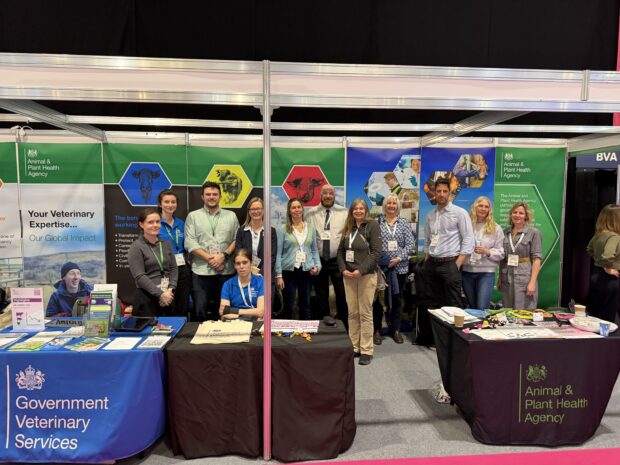
Over two days, we spoke to a diverse range of delegates keen to learn more about Government vet work. We spoke with vet students and recent graduates interested in exploring different professional opportunities, experienced vets considering a career change, vets working at NGOs and in the military, and a lot of vet nurses. Our conversations highlighted the breadth of backgrounds and career journeys within the veterinary sector, with skills and experiences that would suit a variety of roles in Government.
Many people were curious about where to look for Government job opportunities – these are advertised on the Civil Service Jobs website, where personalised job alerts can easily be set up to reflect the desired area(s) of interest, seniority level, and many more factors besides. The application process varies according to the specific role but usually involves a CV and personal statement, with some roles also requiring demonstration of certain skills or “behaviours” (for example, leadership). Although it may seem very different at first, it’s all about highlighting transferrable skills that all veterinary professionals will inherently possess.
We each spoke about our own different paths into Government – from practice, research and academia, policy and international development work, with several of us combining Government vet work with roles in the private sector. We talked about the civil service recruitment process, roles we had held within the veterinary or animal welfare sphere, research and development fellowships, and the lessons we had learned along the way.
Beyond career chats, many vets in practice raised general concerns about work stress, high client expectations, staff retention issues, and the on-going Competition and Markets Authority (CMA) investigation. One thing that clearly stood out was the desire for a more flexible approach to work – supporting a better balance for hobbies, family life, and personal health issues. Flexibility is a huge perk for most Government roles, with colleagues often having opportunities to work part-time or compressed hours with a mix of office or field and home working. Learning and development are also strongly encouraged, with many staff attending courses and conferences (and events such as this one!) to further their personal learning, adding value for the wider organisation.
It was great to see an emphasis on inclusivity and accessibility for colleagues with babies, and those with health conditions and mobility issues, as well as more diversity among delegates at the Show. It was also interesting to hear clear references to veterinary costs and the on-going CMA investigation in the lectures themselves, with clinicians recognising the challenges for both the profession and clients alike in the current environment.
Perhaps the best part of attending London Vet Show is always the opportunity to reconnect in-person with friends, colleagues, teachers and mentors. Several of us on the GVS stand this year were in the same year group at vet school It was interesting to hear about our different journeys and the exciting work we’ve all taken part in along the way. It’s always a pleasure being part of the team on the GVS stand - we hope our conversations with delegates were useful and we encourage anyone interested in working at GVS to get in touch and explore future opportunities!